
How to Request DeKalb County Public Records
Identify the record. Identify the custodian. Send a written request to the custodian. That is the short version. The Georgia Attorney General's open government page at law.georgia.gov/key-issues/open-government explains the citizen's right of access. Most agencies accept email requests, and many publish an open-records officer contact.
The Georgia AG open government landing page provides citizens with statute summaries and complaint routes.
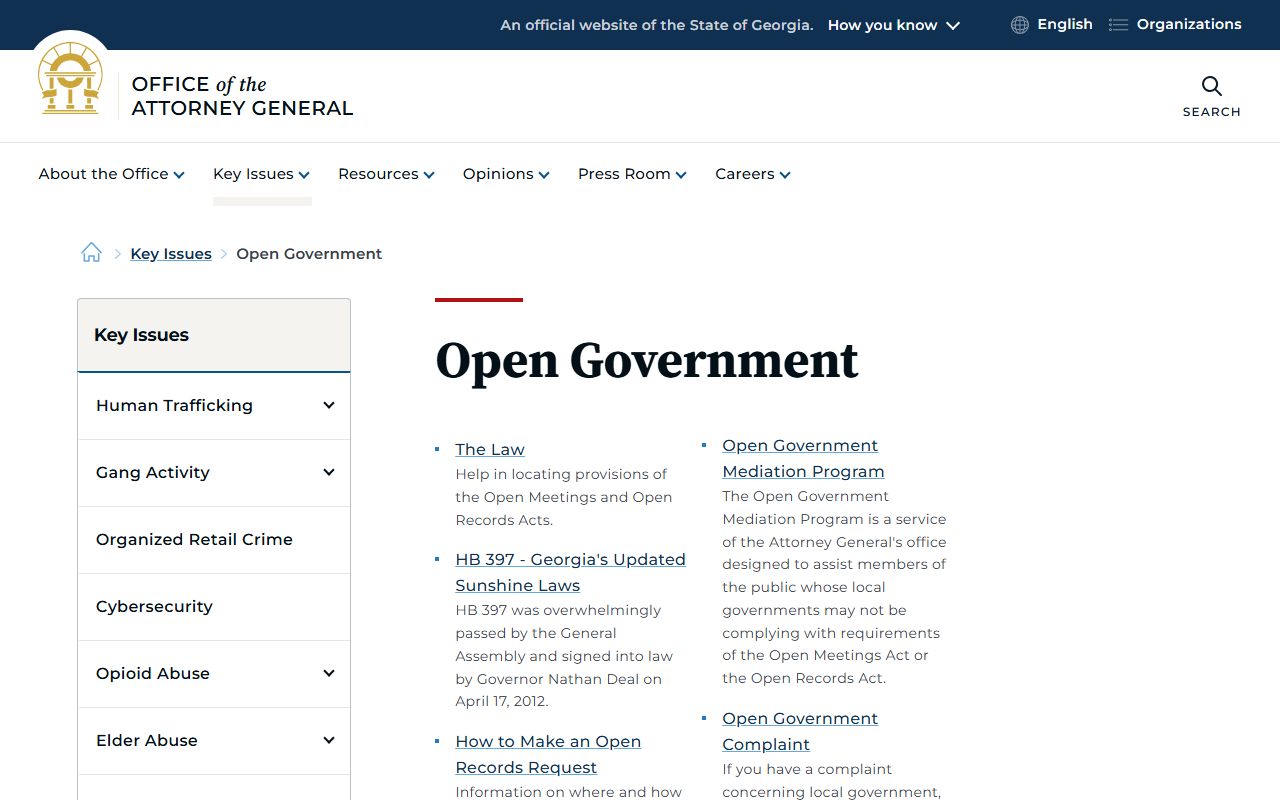
The AG page is the right reading before drafting a DeKalb open records request. It covers what is open, what is exempt, and how to escalate a denial.
Georgia Open Records Act Framework
The Georgia Open Records Act is at O.C.G.A. § 50-18-70 et seq. Section 50-18-70 sets the policy that public records are open for inspection. Section 50-18-71 requires agencies to respond within three business days and limits fees to actual search, retrieval, redaction, and copying costs. Section 50-18-72 lists exemptions for confidential records, pending investigations, medical data, and attorney work product. Section 50-18-73 covers enforcement and the attorney-fee exposure for agencies that violate the act.
The act applies broadly to agency records. Court files are not strictly "agency records" in the open records sense. Court access is governed by court rules and statutes on file inspection. The act covers Sheriff records, DeKalb County administrative records, and most local government records.
Court Records vs Agency Records in DeKalb
A court file is a judicial record. A Sheriff's incident report, a county budget file, a jail policy, or a body-camera policy is an agency record. The two follow different access frameworks but often overlap on the same incident. An arrest can generate a sheriff arrest report and a court criminal file. A divorce can generate a court file and an underlying agency document if one was filed.
For court files, the clerk of the court is the custodian. For agency records, the agency's open-records officer is the custodian. For DeKalb County government records, see dekalbcountyga.gov. For Sheriff's records, see dekalbsheriff.org.
Which DeKalb Office Has the Record?
A DeKalb County public records request goes to the right custodian. The 2-column routing table covers common categories.
| Record | DeKalb Custodian |
|---|---|
| Felony case file | Clerk of Superior Court |
| Misdemeanor case file | State Court Clerk |
| State Court traffic citation | State Court Clerk or traffic division |
| Divorce decree | Clerk of Superior Court |
| Marriage license | Probate Court |
| Probate estate file | Probate Court |
| Jail booking record | Sheriff's Office (Tyler Jail Search) |
| Arrest warrant | Magistrate Court or Sheriff's warrant unit |
| Real estate deed | Clerk of Superior Court real estate |
| Georgia criminal history | Georgia Bureau of Investigation |
| Driver record | Georgia Department of Driver Services |
| Federal case | PACER, Northern District of Georgia |
| County budget or policy | DeKalb County open-records officer |
| Sheriff's incident report | DeKalb County Sheriff's Office |
Note: A request sent to the wrong office may be delayed or returned. Identify the custodian first.
How to File a DeKalb County Open Records Request
The step-by-step below covers the safer process.
- Identify the custodian. Court files go to the clerk; sheriff records go to the Sheriff's Office; county administrative records go to DeKalb County; criminal history goes to GBI; driver records go to DDS.
- Describe the record precisely. Include names, case number, citation number, booking number, date range, court, agency, and document type.
- Ask for electronic copies if acceptable. This can reduce cost.
- Ask for a cost estimate before expensive search, retrieval, or redaction. Custodians must provide an estimate when costs will be significant.
- For court records, specify the copy type: certified, exemplified, or plain.
- If denied, ask for the statutory exemption or court order supporting the denial.
- For sealed or restricted records, ask whether a petition or court order is required.
The federal PACER system covers any federal case involving a DeKalb resident.
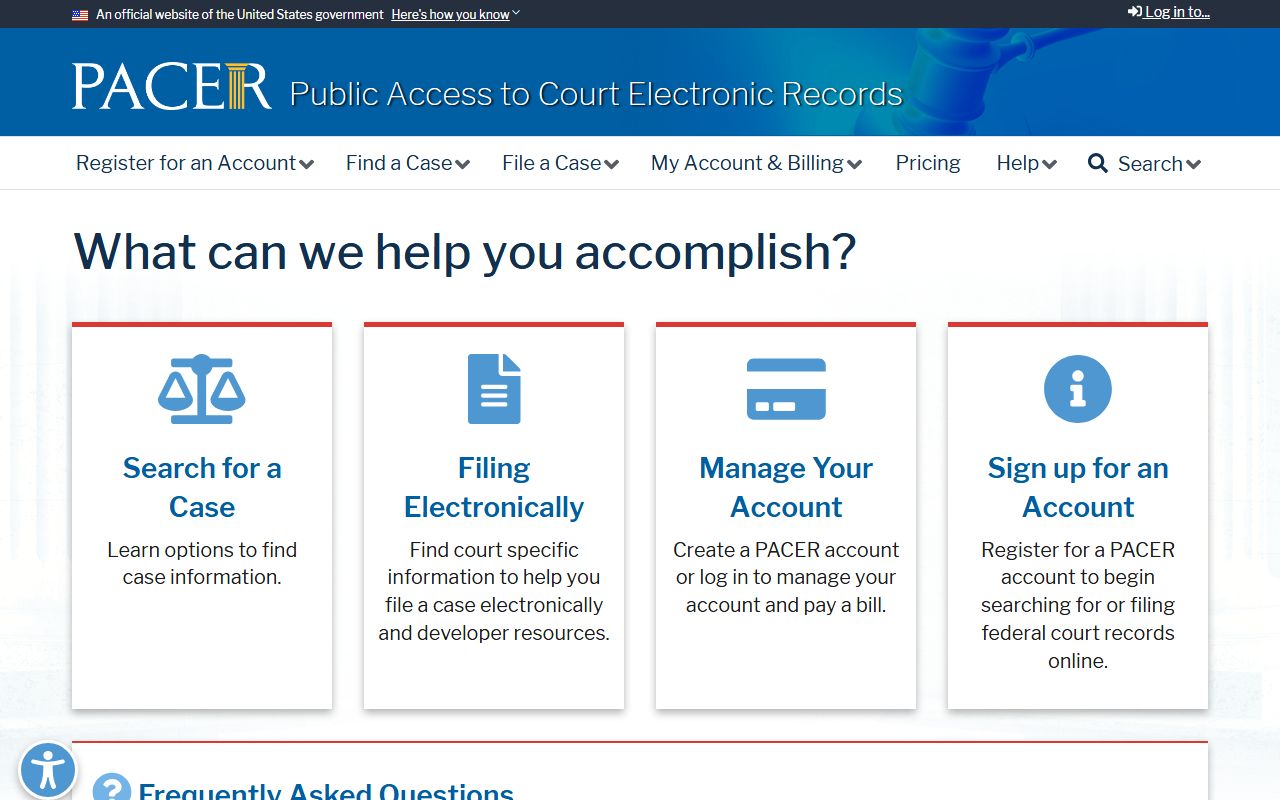
PACER is the official federal docket system. It requires registration and charges per page, with quarterly waiver thresholds for low-volume users.
Response Times and Fees Under Georgia Law
Under O.C.G.A. § 50-18-71, agencies must respond within three business days. The response can produce the records, explain a delay with a date, deny with a legal basis, or provide a cost estimate. Fees must be tied to actual search, retrieval, redaction, and copying costs. The agency must use the least expensive qualified employee reasonably available for the work.
| Fee Item | Amount |
|---|---|
| Search and retrieval time | Actual cost; first 15 minutes free |
| Copying per page | Verify with custodian: typically tied to actual cost |
| Electronic delivery | Often free or low cost |
| Certified court copy | Verify with court clerk |
| Sheriff incident report copy | Verify with Sheriff's Office |
| GBI Georgia criminal history | See GBI for current fee |
Note: An agency must provide a cost estimate before processing when the total cost will exceed a stated threshold. Ask in writing.
Statutory Exemptions to DeKalb Open Records
O.C.G.A. § 50-18-72 lists the exemptions. Confidential records, pending investigations, medical and vital information, attorney-client and work product material, trade secrets, and personal data are all listed in some form. The list is long. An agency that denies a request must cite the legal authority for the denial.
Court records carry their own confidentiality framework. Juvenile records are restricted under O.C.G.A. § 15-11-700 et seq. Adoption records are sealed under O.C.G.A. § 19-8-23. Sealed court records require a court order. Grand jury proceedings, attorney work product, mental-health evaluations, and certain victim information may be redacted or withheld. The court records page covers the court-side rules in detail.
Sealed and Restricted DeKalb Records
Sealed records require a court order to access. Restricted criminal history under O.C.G.A. § 35-3-37 is limited in public dissemination but may still appear in law-enforcement or licensing contexts. Juvenile records are not ordinary public records. Adoption records are sealed by statute. Family-violence and stalking protective orders may contain safety-sensitive material that is redacted on the public docket.
For a sealed record, the path is a petition to the court that owns the file. For a restricted criminal history entry, the GBI process at gbi.georgia.gov is the route. The criminal records page explains Georgia record restriction in plain English.
Criminal History vs Open Records in DeKalb
A Georgia criminal history report is not requested under the Open Records Act. It is requested through GBI under O.C.G.A. § 35-3-34. Dissemination is narrower than docket access. A DeKalb court docket can be open while the GBI criminal history report on the same person follows different access rules.
For employer or licensing background checks, the GBI process is the official route. For private background-screener results, the screener follows separate federal rules under the Fair Credit Reporting Act. A private database showing an old DeKalb arrest may not reflect current GBI restriction. The dispute path runs through the screener and through GBI, not through the court clerk.
Driver Records vs Court Records
A Georgia driver record is a Department of Driver Services file. The DDS motor vehicle record page is at dds.georgia.gov. The MVR shows license status, reported convictions, points, suspensions, revocations, and reinstatement history.
The DDS record is not the court docket. A court traffic disposition only becomes a DDS entry after it is reported through the court reporting chain. For court-side traffic records, see traffic court records. For license-status questions, go to DDS.
Sample DeKalb Open Records Request Form Fields
A useful written request has the fields below. The custodian may have its own form, but a written request that contains this information will work.
| Field | Type | Required | Notes |
|---|---|---|---|
| Requester name | text | yes | Person asking for the record. |
| Mailing address | text | usually yes | Needed for mailed copies. |
| often yes | Electronic delivery and status updates. | ||
| Phone | phone | optional | For clerk follow-up questions. |
| Case number | text | optional | Speeds the search when known. |
| Party names | text | yes if no case number | Include prior or alternate names. |
| Document requested | checkbox / text | yes | Docket, complaint, decree, sentence, certified copy. |
| Copy type | radio | yes | Plain, certified, or exemplified. |
| Delivery method | checkbox | yes | Email, mail, or pickup. |
| Payment method | check / card / money order | yes if fee | Use the custodian's accepted methods. |
| Signature and date | signature | yes | Some forms require certification. |
Sample Request Letter Language for DeKalb Records
The two short samples below cover the most common DeKalb scenarios. They can be sent by email or letter.
Court records request: "Please provide a copy of the public court record identified as [case number], [case caption], filed in [court]. I request [plain, certified, or exemplified] copies of [specific document names]. If the record is sealed, restricted, archived, or unavailable online, please advise of the legal basis or the process required to request access. Please provide a fee estimate before processing if total cost will exceed twenty-five dollars."
Sheriff or county agency request: "Pursuant to the Georgia Open Records Act, please provide electronic copies of [specific records] for [date range]. I request that responsive records be provided by email where possible. If any portion is withheld or redacted, please cite the specific legal authority for the withholding. Please provide a cost estimate before processing if costs exceed twenty-five dollars."
What to Do If a DeKalb Open Records Request Is Denied
A denial must cite legal authority. If the citation does not match the record sought, ask for clarification in writing. The Georgia Attorney General's open government guide at law.georgia.gov/key-issues/open-government provides escalation paths. Civil enforcement is available under O.C.G.A. § 50-18-73, with attorney-fee exposure for the agency in some cases.
For court files, court rules and statutes control. A sealed file requires a petition to the court. A restricted criminal history requires the GBI process. For pending investigation exemptions, the records may become available after the investigation closes. A patient written follow-up often resolves a denial faster than a court action.